International Flamenco Day: Why November 16 Belongs to Flamenco
Some art forms get a statue. Some get a museum. Flamenco got something better: a day on the world's calendar. Every November 16, Spain and flamenco lovers across the globe celebrate International Flamenco Day, el Día Internacional del Flamenco, honoring an art born in the courtyards and taverns of Andalusia that went on to conquer stages on every continent.
If you have ever wondered when Flamenco Day is, why it exists, and how people actually celebrate it, this guide covers the full story: the UNESCO decision behind the date, what "intangible cultural heritage" really means, and how you can join the celebration wherever you are, including, of course, in Barcelona.
When Is International Flamenco Day, and Why November 16?
International Flamenco Day falls on November 16 every year. The date commemorates November 16, 2010, when UNESCO inscribed flamenco on its Representative List of the Intangible Cultural Heritage of Humanity, during a committee meeting held in Nairobi, Kenya.
That decision recognized what aficionados had known for two centuries: flamenco ranks among the great cultural achievements of humankind. Since then, November 16 has grown into a genuine celebration, especially across Andalusia, where schools teach flamenco workshops, theaters program special concerts, radio stations fill the airwaves with cante, and institutions organize exhibitions and tributes. The celebration has spread far beyond Spain, with peñas flamencas (flamenco associations) from Tokyo to Buenos Aires marking the date with performances and gatherings.
What Does "Intangible Cultural Heritage" Actually Mean?
UNESCO's better-known list protects places: cathedrals, historic centers, natural wonders. The Intangible Cultural Heritage list protects something more fragile: living traditions that exist only while people practice them. Songs, dances, crafts, rituals and oral traditions that pass from generation to generation, carried in bodies and memories rather than in stone.
Flamenco fits that definition perfectly. There is no original flamenco manuscript, no founding monument. The art lives in the throat of the singer who learned from her grandmother, in the hands of the guitarist who absorbed his falsetas at family gatherings, in the feet of the dancer who grew up surrounded by compás. Remove the people and the chain of transmission, and flamenco vanishes.
UNESCO's declaration acknowledged three dimensions of the art: the cante (song), the baile (dance) and the toque (guitar), and it highlighted flamenco's role as a badge of identity for Andalusia, for the Gitano community that shaped it profoundly, and for Spain as a whole. The recognition also carried a responsibility: to safeguard flamenco through education, documentation and, above all, live performance. Every tablao that opens its doors at night participates in exactly that mission.
A Brief History of the Art the World Chose to Protect
Flamenco emerged in Andalusia between the 18th and 19th centuries, forged in the meeting of cultures that defines southern Spain: Gitano, Andalusian, Moorish and Jewish influences layered over centuries. It began as intimate music, sung at family celebrations and in humble patios, long before any stage existed for it.
The cafés cantantes of the 1800s gave flamenco its first professional homes, and the 20th century carried it worldwide. Figures like Carmen Amaya, the Barcelona-born dancer who astonished Hollywood, Paco de Lucía, who took the flamenco guitar into concert halls across the globe, and Camarón de la Isla, the singer who revolutionized cante and became a legend, turned a regional tradition into a universal language.
Barcelona wrote important chapters of that story. Waves of Andalusian migration made the city a flamenco capital in its own right, with the Paral·lel avenue and later the tablaos of the city center pulsing with the art night after night. Tablao Flamenco Cordobes, opened on La Rambla in 1970, hosted icons like Camarón and Lola Flores and remains a pillar of that legacy today, a legacy that now continues at El Duende, its intimate flamenco bar a few steps down the same street.
How Spain Celebrates el Día del Flamenco
Land in Andalusia around November 16 and you will feel the date everywhere. Public institutions organize free concerts and open days. Schools across the region dedicate classes to flamenco's history, with children learning palmas and basic steps. Museums and cultural centers mount exhibitions on the great dynasties of the art. Radio and television produce specials, and social media fills with tributes under the day's hashtags.
The peñas flamencas, the grassroots clubs that have safeguarded the art for generations, hold special recitals where veteran artists and rising talents share the stage. In cities like Seville, Jerez, Granada and Málaga, the day often stretches into a full week of programming.
And in the tablaos, the celebration takes its most natural form: the show goes on, as it does every night, because the truest homage to a living art is to keep it alive. On November 16, performing flamenco is the celebration.
How to Celebrate International Flamenco Day Yourself
You need no invitation and no Spanish passport to join. Here are meaningful ways to mark the date, wherever you find yourself.
Listen deeply. Spend the day with the giants: Camarón de la Isla's voice, Paco de Lucía's guitar, the recordings of La Niña de los Peines, the modern brilliance of artists like Vicente Amigo or Estrella Morente. Streaming platforms overflow with essential flamenco; November 16 is the perfect excuse to build a habit.
Learn something. Read about the palos and their emotional worlds. Watch documentaries on the great dynasties. Learn what jaleo means and why audiences shout "¡olé!". Understanding multiplies enjoyment, and flamenco rewards curiosity endlessly.
Try your hands. Palmas, the rhythmic handclapping of flamenco, offer the most accessible entry point into compás. Plenty of online tutorials teach the basic patterns. Fair warning: it is harder than it looks, and strangely addictive.
Above all, see it live. Flamenco is intangible heritage precisely because it exists fully only in live performance, in a room where singer, guitarist, dancer and audience breathe together. Recordings document the art; live shows are the art. If you can reach a tablao on November 16, or any night near it, you will be celebrating exactly as UNESCO intended.
Celebrating Flamenco Day in Barcelona
If your travels bring you to Barcelona in mid-November, consider yourself lucky twice over. The city wears autumn beautifully, the high-season crowds have thinned, and its flamenco venues perform with the same intensity as in August, to rooms that fill with a knowing, appreciative audience.
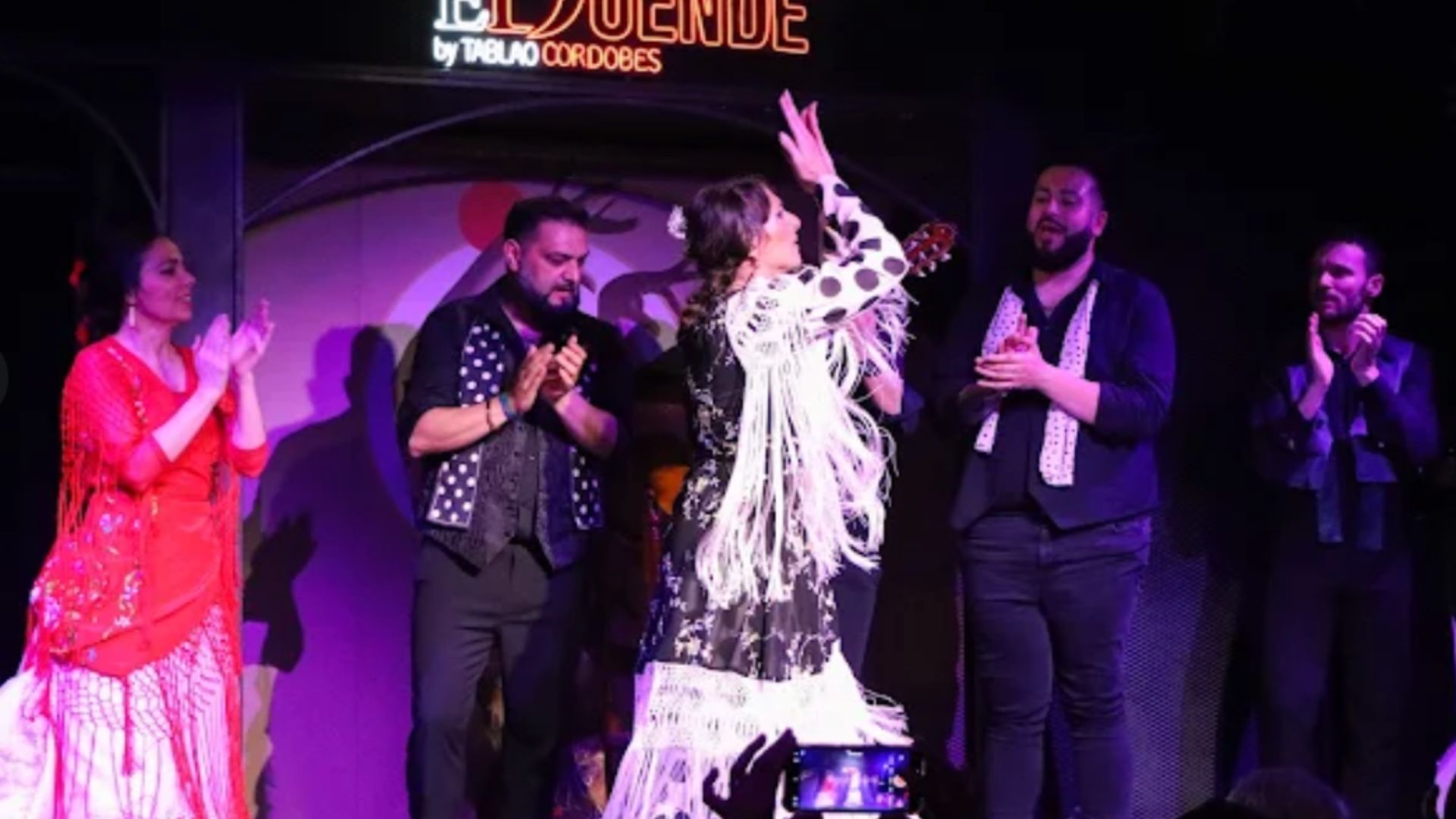
At El Duende by Tablao Cordobes, on La Rambla 33, we consider every night a small Día del Flamenco. Our stage carries the direct inheritance of half a century of flamenco history in Barcelona, and our format honors the way the art was always meant to be experienced: 120 seats, a drink in hand, world-class artists close enough to feel the floor tremble under the zapateado, and 55 minutes where song, dance and guitar converse the way they have for two hundred years.
November 16 simply gives us one more reason to do what we love. And it might give you the perfect reason to finally have the experience you have been postponing.
Frequently Asked Questions
When is International Flamenco Day?
November 16, every year, commemorating UNESCO's recognition of flamenco as Intangible Cultural Heritage of Humanity on November 16, 2010.
Is Flamenco Day celebrated outside Spain?
Yes. Flamenco associations and academies worldwide mark the date with performances, workshops and gatherings, reflecting the art's global community.
Is November a good time to see flamenco in Barcelona?
Excellent. Venues perform nightly year-round, and autumn offers easier availability across all seating zones, plus the special atmosphere surrounding Flamenco Day itself.
Do tablaos hold special shows on November 16?
Programming varies by venue and year. Many tablaos mark the date, and the nightly show itself embodies the celebration; check the venue's program close to the date.
The Best Way to Honor a Living Art
Heritage lists and commemorative days matter because they focus the world's attention. Flamenco itself asks for something simpler: your presence. An art that lives only in performance is reborn every time an audience gathers, leans in and lets a voice take them somewhere unexpected.
So this November 16, or any night the duende calls, come and celebrate the way flamenco has always been celebrated: live, up close, with a glass raised. El Duende by Tablao Cordobes awaits at La Rambla 33, in the heart of Barcelona, ready to show you exactly why the world decided this art belongs to all of humanity. Book your tickets and be part of the heritage.