
What Is a Flamenco Show? Everything to Know Before Your First Night at a Tablao
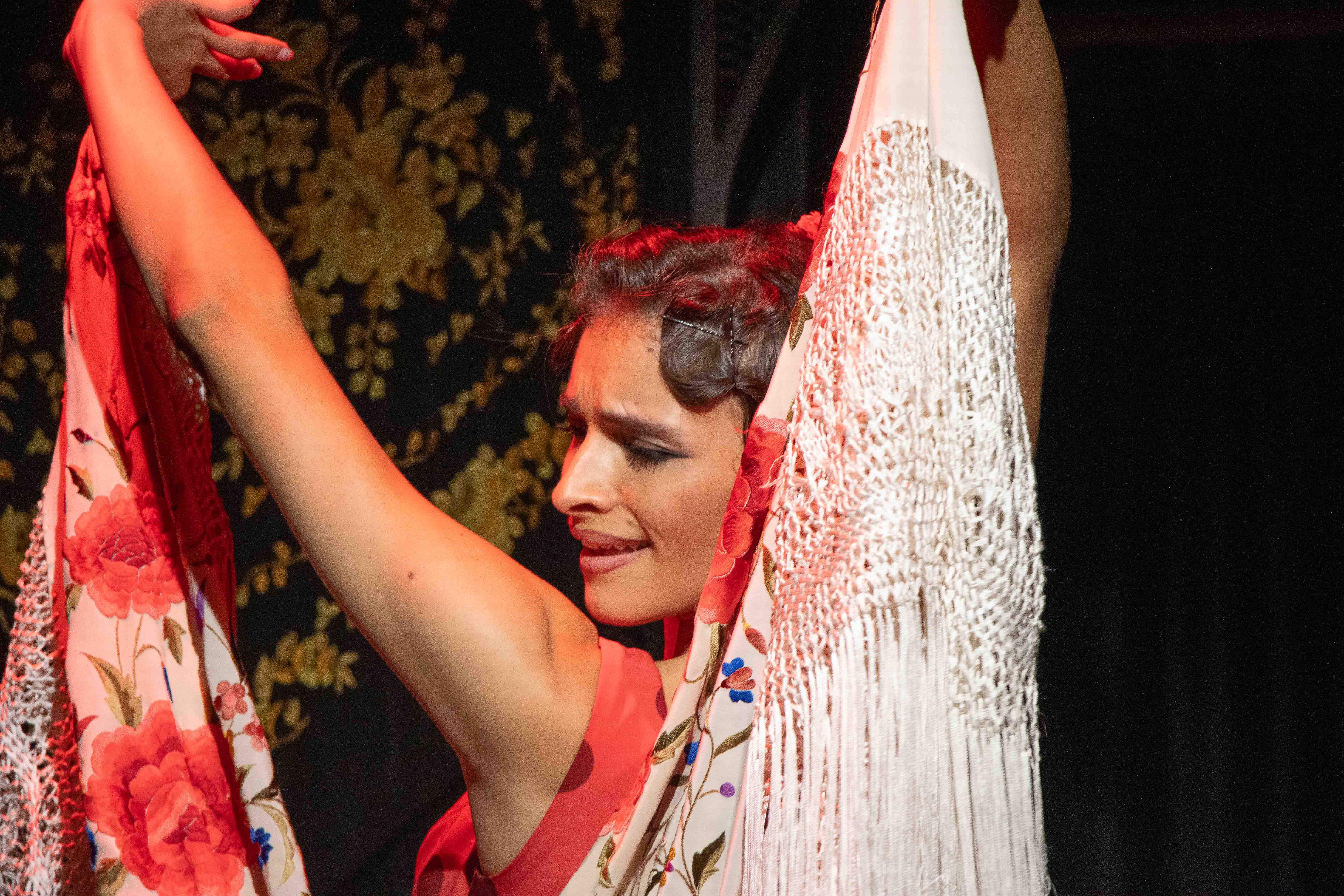
A flamenco show is a live performance of flamenco, the centuries-old art form from southern Spain that combines three elements: cante (singing), baile (dance) and toque (guitar playing), woven together with rhythmic handclaps and shouts of encouragement. In its most authentic form, a flamenco show happens in an intimate venue called a tablao, where the audience sits close to the stage and the performance is largely improvised, so no two nights are ever the same.
That is the short answer. The full answer is far more interesting, because a flamenco show works unlike almost any other performance you have seen. This guide walks you through what actually happens on stage, where to see flamenco, how long shows last, and how to tell an authentic experience from a tourist trap. By the end, you will walk into your first show knowing exactly what you are watching, and why the person next to you just shouted "¡olé!" at what seemed like a random moment.
The Three Pillars of Every Flamenco Show
Flamenco stands on three legs, and a genuine show gives each one its moment.
El cante (the singing)
Ask any aficionado and they will tell you the voice is the soul of flamenco. The cante came first historically, born in the Gitano and Andalusian communities of southern Spain, and everything else grew around it. Expect raw, powerful, sometimes anguished singing, closer to a cry from the heart than to a polished melody. You do not need to understand Spanish to feel it; the emotion travels on the voice itself.
El baile (the dance)
The most visually spectacular element. Flamenco dancers speak with their entire bodies: proud posture, sinuous arms, expressive hands, and that famous percussive footwork called zapateado, where heels and toes turn the floor into a drum. Watch how the dancer converses with the musicians, accelerating, pausing, exploding. Improvisation lives at the center of it all.
El toque (the guitar)
The flamenco guitarist supplies harmony, rhythm and atmosphere at once, switching from delicate melodic passages called falsetas to driving rhythmic strumming known as rasgueado. Great flamenco guitarists rank among the finest musicians in the world, and in a small venue you can watch their hands work from just a few feet away.
Around these pillars orbit two more ingredients: palmas, the intricate patterns of handclapping that mark the rhythm, and jaleo, the spontaneous shouts of "¡olé!", "¡arsa!" and "¡eso es!" that performers and audience members use to encourage each other. Together they form the compás, the rhythmic cycle that governs everything.
What Actually Happens During a Flamenco Show?
A typical show unfolds as a sequence of palos, the traditional song forms of flamenco. Each palo has its own rhythm, mood and history. Some, like the soleá or the seguiriya, are deep and solemn, carrying centuries of sorrow. Others, like the alegrías or the bulerías, overflow with joy and playfulness. A well-built program moves through several palos, taking the audience on an emotional journey from darkness to celebration.
Here is what surprises most first-time spectators: much of what you see is improvised. Flamenco artists work within shared structures, and inside those structures they listen and react to each other in real time. The singer stretches a line, the guitarist answers, the dancer seizes the moment and demands more. This is why the performers watch each other so intently, and why the artists seated at the back keep working the whole time, clapping palmas and throwing out jaleo. A flamenco show functions less like a choreographed recital and more like a living conversation.
It is also why aficionados return again and again. At El Duende, our regulars tell us that every visit reveals something new: a different gesture, an unexpected turn, a night when the mysterious force Spaniards call duende takes over the room.
Where Do Flamenco Shows Happen? Understanding the Tablao
You can see flamenco in grand theaters, at festivals, in neighborhood peñas (private flamenco clubs) and, in December in Andalusia, at street celebrations like the zambomba. But the classic home of the flamenco show is the tablao.
The word comes from tablado, the wooden platform that amplifies the dancer's footwork. A tablao is an intimate venue, usually seating between 50 and 200 people, where professional artists perform nightly at close range, often with food or drinks served. Tablaos emerged in the mid-20th century as heirs to the cafés cantantes of the 1800s, and they became the training ground and proving ground for virtually every great flamenco artist of the modern era. Legends like Camarón de la Isla and Lola Flores built their reputations on tablao stages, including the stage of Tablao Flamenco Cordobes in Barcelona, a landmark of the art since 1970.
The intimacy matters more than you might think. Flamenco was born in family courtyards and taverns, performed for people sitting an arm's length away. Up close, you catch the details that carry the emotion: the tension in a singer's jaw, the sweat on a dancer's brow, the glance that passes between guitarist and dancer a half-second before everything erupts. Distance dilutes flamenco. Closeness concentrates it.
That principle shapes everything at El Duende, the flamenco bar created by the team behind Tablao Cordobes on La Rambla in Barcelona. With a maximum capacity of 120 people, every seat keeps you near enough to feel the zapateado vibrate through the floor while you sip a glass of cava or a signature cocktail.
How Long Is a Flamenco Show, and What Should You Expect as a Guest?
Most tablao shows last about an hour; at El Duende the performance runs 50 to 55 minutes, an intense, carefully paced journey with no filler. You will typically be seated with a drink, the lights will dim, and the artists will take the stage together.
A few tips will help you enjoy it like a seasoned aficionado. Arrive a little early to settle in and soak up the atmosphere. Silence your phone; the artists feed off the room's attention. Applaud generously at the end of each number, and if a moment genuinely moves you, a heartfelt "¡olé!" in one of the natural pauses will always be welcome. There is no strict dress code at most tablaos, though many guests enjoy dressing up a little for the occasion. And feel free to let the show simply wash over you: flamenco communicates in a language older than words, and your only job is to feel it.
How to Choose an Authentic Flamenco Show
Cities like Barcelona, Madrid and Seville offer dozens of options, and quality varies. A few signals separate the real thing from a diluted imitation. Look for live music, always; recorded soundtracks are an immediate red flag. Favor small venues over huge halls, for all the reasons above. Check the pedigree: shows produced by established tablaos with decades of history tend to attract the strongest artists. Read recent reviews and notice whether guests describe emotion and connection rather than just spectacle. Finally, look at the lineup: authentic shows feature a full company of singers, dancers and guitarists sharing the stage as an ensemble.
Frequently Asked Questions
Is a flamenco show suitable for children?
Yes. Flamenco is family-friendly, and children are often mesmerized by the rhythm and movement. An hour-long format suits kids who can sit through a performance.
Do I need to speak Spanish?
No. The lyrics add a layer for Spanish speakers, and the core of the experience, the music, the dance and the emotion, needs no translation.
Should I book in advance?
Strongly recommended. Intimate venues sell out quickly, especially on weekends and in high season. With 120 seats and nightly functions, El Duende regularly fills up days ahead.
What is the difference between a flamenco show and a flamenco dinner show?
Some venues serve a full meal during or before the performance, while others, like El Duende, pair the show with drinks and cocktails, keeping the focus on the stage.
Ready to Feel It for Yourself?
Reading about flamenco is like reading about fire: accurate, perhaps, and hopelessly incomplete. The art only truly exists live, in a small room, with the compás pulsing through the floor and a voice cracking open the air a few steps from your seat.
If your travels bring you to Barcelona, come and experience the answer to "what is a flamenco show" the way it deserves to be answered. El Duende by Tablao Cordobes awaits at La Rambla 33, in the heart of the city, with world-class artists, a drink with your name on it, and 55 minutes that may change how you understand Spain. Book your tickets, take your seat, and let the duende do the rest.