
Flamenco Singing in Barcelona: The Voices, the History and Where to Hear Them Live
When people think of flamenco singing, their minds usually travel south to Andalusia, to the patios of Seville, the forges of Jerez or the salt air of Cádiz. Andalusia is indeed the cradle of cante flamenco.
Yet one of the most fascinating chapters in the history of this art was written more than 900 kilometers to the northeast, in Barcelona. The Catalan capital has produced world-class flamenco singers, hosted the legends of the genre for decades and today remains one of the best cities in the world to hear cante performed live.
This guide explores how flamenco singing took root in Barcelona, the voices that made the city famous, and where you can experience an authentic flamenco show in the heart of La Rambla today.
How Flamenco Singing Arrived in Barcelona
Flamenco reached Barcelona earlier than many people assume. By the second half of the 19th century, the city's thriving port and industrial economy had turned it into a magnet for workers from across Spain, and with the Andalusian migrants came their music.
Venues known as cafés cantantes, the singing cafés where flamenco first became a professional stage art, flourished in Barcelona just as they did in Seville and Madrid. The area around the lower Rambla and the Paral·lel avenue filled with theaters and music halls where cante was performed nightly.
The great waves of migration in the 20th century transformed this presence into a deep local culture. Between the 1920s and the 1960s, hundreds of thousands of Andalusians settled in Barcelona and its industrial belt, in neighborhoods like the Somorrostro beach settlement, and in cities such as Badalona, Sabadell and L'Hospitalet.
These communities carried flamenco in their family life, their festivals and their sorrows. Children grew up hearing soleares and fandangos at home, and a distinctly Catalan school of flamenco began to form.
Barcelona also gave flamenco one of its universal icons. Carmen Amaya, arguably the greatest flamenco dancer of all time, was born in the Somorrostro shantytown by the Barcelona shoreline in 1913.
Although she conquered the world with her feet, she came from a family of singers and guitarists, and her story symbolizes how deeply flamenco belongs to this city.
The Great Flamenco Voices of Barcelona and Catalonia
Catalonia has produced an extraordinary lineage of cantaores and cantaoras whose names command respect in Andalusia itself. Any conversation about flamenco singing in Barcelona should include these artists.
Miguel Poveda is the most celebrated example. Born in Badalona in 1973 to a family with roots in Murcia and Andalusia, Poveda rose from the flamenco peñas of the Barcelona area to become one of the most acclaimed singers of his generation, winning the prestigious Lámpara Minera at the Festival de las Minas in 1993.
His career includes collaborations across genres and sold-out theaters worldwide, and his artistic formation is inseparable from Barcelona's flamenco circuit, including the stage of the legendary Tablao Flamenco Cordobes on La Rambla.
Mayte Martín, born in Barcelona in 1965, represents the intimate, refined side of cante. Winner of major awards including the Lámpara Minera, she is admired for her exquisite control, her deep knowledge of traditional styles and her ability to move audiences with restraint rather than volume.
Duquende, born in Sabadell into a Gitano family, earned recognition as one of the great modern voices in the school of Camarón de la Isla, touring the world with guitar legend Paco de Lucía.
Montse Cortés, from Barcelona's La Mina community, and Ginesa Ortega, raised in Catalonia, both became first-rank cantaoras, in demand by the finest dance companies for the power and flexibility of their voices.
This roster makes a simple point: flamenco singing in Barcelona is a homegrown tradition with deep local roots, sustained by families, neighborhood peñas and stages that have nurtured talent for generations.
The Role of the Tablao: Where Cante Lives Every Night
To understand where to hear flamenco singing in Barcelona today, you need to understand the tablao. A tablao is an intimate venue built specifically for live flamenco, the modern heir of the historic cafés cantantes. In a tablao, the audience sits close to a small stage, the artists perform without theatrical distance, and the program changes constantly because the performers rotate.
For singers, the tablao is both a workplace and a proving ground. Night after night, a cantaor must accompany dancers with precision, respond to the guitarist in real time and deliver solo moments that hold a room in silence. Many of the great careers in flamenco, including several of the Barcelona voices mentioned above, were forged on tablao stages.
Barcelona's most storied tablao is the Tablao Flamenco Cordobes, founded in 1970 on La Rambla by a family of artists. For more than five decades, its stage has welcomed legends of cante such as Camarón de la Isla, Fernanda and Bernarda de Utrera, Chocolate and Juan Villar, alongside the finest dancers and guitarists of every era. In 2025, this trajectory earned it recognition as the Best Tablao in the World, a distinction that confirms what aficionados have known for generations.
El Duende: A New Home for Flamenco Singing on La Rambla
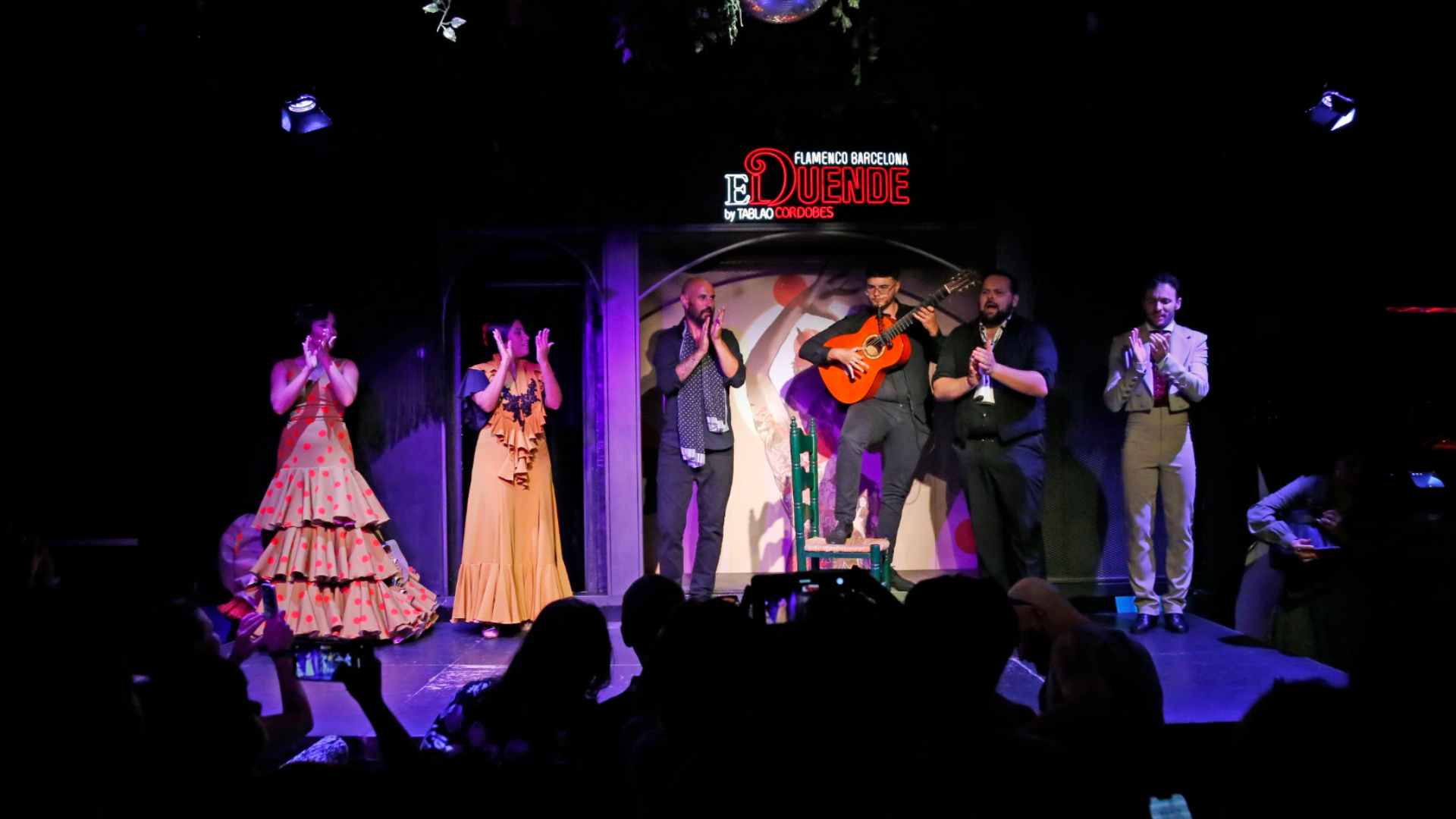
That same family legacy gave birth in 2024 to a new venue built around closeness and musical purity: El Duende by Tablao Cordobes, located at La Rambla 33, right in the heart of Barcelona.
El Duende is a flamenco bar and cocktail venue with capacity for just 120 guests, designed so that every seat keeps you near the artists. For lovers of cante, this intimacy changes everything.
Flamenco singing is an art of detail: the crack in a voice at the top of a phrase, the whispered opening of a soleá, the sudden explosion of a bulería. In a small room, none of that detail is lost.
You hear the singer breathe, you see the eyes close before a difficult line, and you feel the communication between voice, guitar and dance happening in real time a few meters away.
The programming philosophy also favors the song. El Duende combines renowned artists with emerging talents who are shaping the future of flamenco, with special attention to Catalan performers, continuing the very tradition that produced Poveda, Martín and Duquende.
The lineup rotates throughout the month, six to seven artists share each show, and every night offers a different repertoire of palos. One evening might lean toward deep, solemn cante jondo; the next might overflow with festive tangos and alegrías.
Practical details are simple. Shows run daily at 7:00 pm, 8:15 pm and 9:30 pm and last around 50 to 55 minutes, with check-in just 10 minutes before showtime. Most seating zones include one drink during the show, such as wine, beer, sangria, cava or a soft drink, and the Frontal Zone guarantees first row seats.
All guests can also order from a curated menu of signature cocktails inspired by the different styles of flamenco, available at the bar. The venue asks for silence during the performance, a house rule that says a great deal about its priorities: here, the voice comes first.
What to Listen For at a Flamenco Show in Barcelona
If you are attending your first live flamenco performance, a few pointers will transform your experience of the singing.
Listen for the temple. Before the verses begin, the singer warms up with wordless syllables, often on "ay." This opening sets the emotional temperature of everything that follows.
Feel the compás. Every palo runs on a rhythmic cycle. Even without counting beats, let your body register the pulse that the palmas and the guitar sustain under the voice.
Watch the dialogue. Flamenco singers rarely perform to the audience alone. They sing to the guitarist and especially to the dancer, whose movements answer each phrase. The best moments arise from this three-way conversation.
Welcome the jaleo. Shouts of "olé," "eso es" or "agua" from the artists are expressions of encouragement, a living part of the tradition rather than interruptions.
Notice the silence. In the deepest moments of cante, a good audience holds its breath. That collective stillness, followed by an eruption of applause, is one of the signature sensations of a night at a tablao.
Why Barcelona Is One of the Best Cities to Hear Cante Today
Some travelers wonder whether they should wait for a trip to Seville or Granada to see flamenco. Andalusia is wonderful, and any flamenco lover should visit it. Barcelona, however, offers advantages of its own.
The city's flamenco community is large, professional and historically rich, drawing on generations of Catalan-born artists as well as a constant flow of performers from the south. Its tablaos maintain internationally recognized standards, crowned by the 2025 Best Tablao in the World distinction within the Cordobes family.
And the geography is unbeatable: on La Rambla, you can walk from the Gothic Quarter or the Liceu opera house straight into a world-class flamenco show, all in a single evening.
For visitors with limited time, a 55-minute show at an intimate venue delivers the essence of cante without requiring a full night's commitment, leaving plenty of evening to enjoy the city afterwards.
Final Thoughts: Come for the Dance, Stay for the Voice
Many guests walk into a flamenco show expecting to be dazzled by the dancing, and they are. What surprises them is the singing. The voice is where flamenco keeps its oldest memories, its deepest wounds and its most explosive joy, and hearing it live in a small room is an experience that recordings cannot approach.
Barcelona has spent more than a century proving that cante flamenco can flourish far from Andalusia. Tonight, a few steps from the sea, that history continues on La Rambla.
Ready to hear flamenco singing in Barcelona? Book your tickets for El Duende by Tablao Cordobes at La Rambla 33 and experience the voice of flamenco up close.