
Zambomba: The Instrument and the Flamenco Christmas Party | El Duende
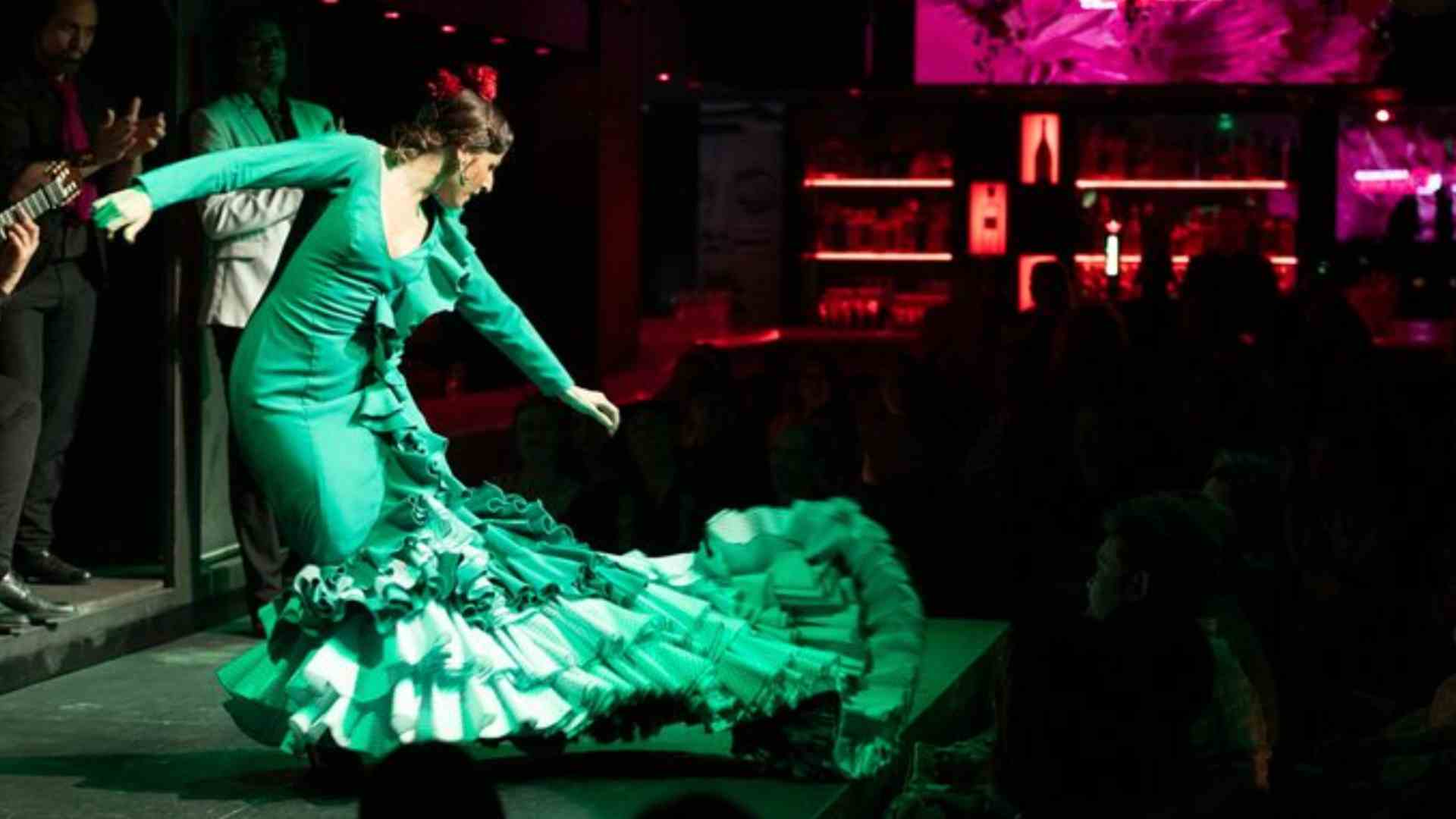
Every art form has its strange and wonderful objects. Flamenco has the cajón, the castanets, the fan and the bata de cola, that endless ruffled train that dancers command like a living creature.
And then, once a year, when December arrives in Andalusia, out comes the most unusual member of the family: the zambomba. Part drum, part groan, part time machine, this humble instrument gives its name to one of the most joyful traditions in all of Spanish culture, the zambomba flamenca.
In this article we look at what a zambomba actually is, how it is played, and how a simple clay pot became the heart of legendary Christmas street parties in Jerez de la Frontera. Along the way you will see that the spirit of the zambomba, communal, spontaneous and deeply emotional, is the same spirit we chase every single night at El Duende, our flamenco bar on La Rambla in Barcelona.
What Is a Zambomba?
A zambomba is a friction drum, one of the oldest families of instruments on earth. The traditional version is beautifully simple. Take a hollow body, historically a clay pot, a wooden cylinder or even a large gourd. Stretch a skin membrane tightly over the opening, the way you would on any drum. Then comes the twist: instead of striking the skin, you pierce its center with a thin reed or stick, known as a carrizo.
To play it, the musician wets one hand and rubs the stick up and down. The friction travels through the membrane and the body of the drum, producing a deep, throaty, pulsing sound, somewhere between a heartbeat and a bullfrog with excellent rhythm. Children in Andalusia have giggled at that noise for generations, and no written description ever quite prepares you for hearing it in person.
The zambomba requires no electricity, no tuning and no conservatory training, and that is precisely the point. It was born as a folk instrument, made at home from whatever was available, so that music could happen anywhere people gathered. Anthropologists have traced similar friction drums across Europe, Africa and Latin America, but in Spain the zambomba found a very specific calling: Christmas.
The Sound of a Spanish Christmas
For centuries, the zambomba has been the engine of the villancico, the Spanish Christmas carol. While much of the world associates carols with choirs and candlelight, the Andalusian villancico is a livelier creature, full of handclaps, tambourines, friction drums and improvised verses. The zambomba supplies the bassline of the season, that steady rumbling pulse underneath songs that families have passed down through generations.
The instrument is so tied to the holiday that in many towns the word zambomba stopped referring only to the drum and began to name the entire celebration built around it. Which brings us to the most famous example of all.
The Zambomba de Jerez: A Street Party Like No Other
Travel to Jerez de la Frontera in the weeks before Christmas and you will find the city transformed. In patios, plazas, bodegas and neighborhood streets, people gather around bonfires with wine, sweets and instruments. Someone starts a villancico. Palmas ignite. A voice rises, then another, and soon an entire crowd is singing verses that everyone seems to know by heart. This is the zambomba de Jerez, and it may be the most contagious party in Spain.
What makes it extraordinary is the flamenco current running through everything. Jerez is one of the historic cradles of flamenco, home to legendary Gitano families and to some of the greatest singers the art has ever produced. When Jerez sings Christmas carols, it sings them por bulerías, in the fast, playful, endlessly swinging rhythm that is the city's signature. The result is the villancico flamenco, a carol with fire in its veins.
The tradition grew out of the old patios de vecinos, the shared courtyards where several families lived around a common well and a common life. On cold December nights, neighbors gathered around the fire, roasted chestnuts, passed around anise liqueur and sang. Everyone participated. The grandmother who knew all the old verses, the child shaking a tambourine, the uncle rubbing the zambomba until his hand ached. Cultural authorities in Andalusia recognized the zambomba of Jerez and Arcos de la Frontera as an official Site of Cultural Interest, protecting it as living heritage, and today thousands of visitors travel to Jerez every December to experience it.
When Christmas Meets the Compás
Musically, the zambomba flamenca is a fascinating collision. Take the tender, familiar melodies of Christmas, then pour them into the twelve-beat cycle of the bulería, flamenco's most festive palo. Add layers of palmas, the deep pulse of the friction drum, a guitar if one is handy, and the shouts of jaleo flying between singers. The sacred and the streetwise embrace, and the result feels both ancient and completely alive.
Many flamenco artists consider these December gatherings their first school. Long before any stage or academy, they learned compás around a bonfire, absorbing rhythm the way children absorb language. The great singers of Jerez often say that the zambomba taught them how to sing in company, how to listen, how to wait for their moment and how to hand the song to the next voice. Those are exactly the skills that make a tablao performance feel like a single living organism rather than a series of solos.
The Spirit of the Zambomba, All Year Round
Here is the beautiful secret behind the zambomba: the drum is almost beside the point. What the tradition really celebrates is gathering. Music made in a circle rather than on a distant stage. Songs that belong to everyone. The warmth of bodies, firelight and shared rhythm on a cold night. Strip away the chestnuts and the carols, and you find the essential DNA of flamenco itself, an art born in family courtyards and taverns long before it ever reached a theater.
That DNA is what we protect at El Duende by Tablao Cordobes. Our venue on La Rambla holds a maximum of 120 people precisely because flamenco breathes best in a circle, where the audience sits close enough to catch every glance between the artists. The heritage behind our shows stretches back to 1970, when the original Tablao Flamenco Cordobes opened its doors and welcomed legends like Camarón de la Isla and Lola Flores, artists raised on exactly the kind of communal music-making the zambomba represents. Every night, when our singers trade verses and our audience answers with applause and the occasional brave olé, the old patio spirit flickers back to life in the heart of Barcelona.
And while the zambomba itself belongs to December, its lessons shape everything you will see on our stage: the way our musicians play for each other, the joy that keeps breaking through even the most solemn palos, and the sense that everyone in the room, artist or guest, is part of the same celebration.
Experience the Fiesta at El Duende
If you ever have the chance to spend a December evening at a zambomba in Jerez, take it. Bring warm clothes, learn a chorus or two, and prepare to be pulled into the circle, because spectators rarely stay spectators for long.
And whenever you find yourself in Barcelona, in any season, come and feel where that same fire lives the rest of the year. At El Duende, at La Rambla 33, our artists pour fifty five minutes of song, dance, palmas and pure emotion into an intimate room every single night, with a drink in your hand and the rhythm rising through the floor. The bonfire may be metaphorical, but the warmth is completely real.
Book your tickets, join the circle, and let flamenco welcome you the way the zambomba has welcomed neighbors for centuries: with open arms, a shared song and a night you will never forget.