
Flamenco Castanets: History, Technique and Where to Hear Them Live in Barcelona
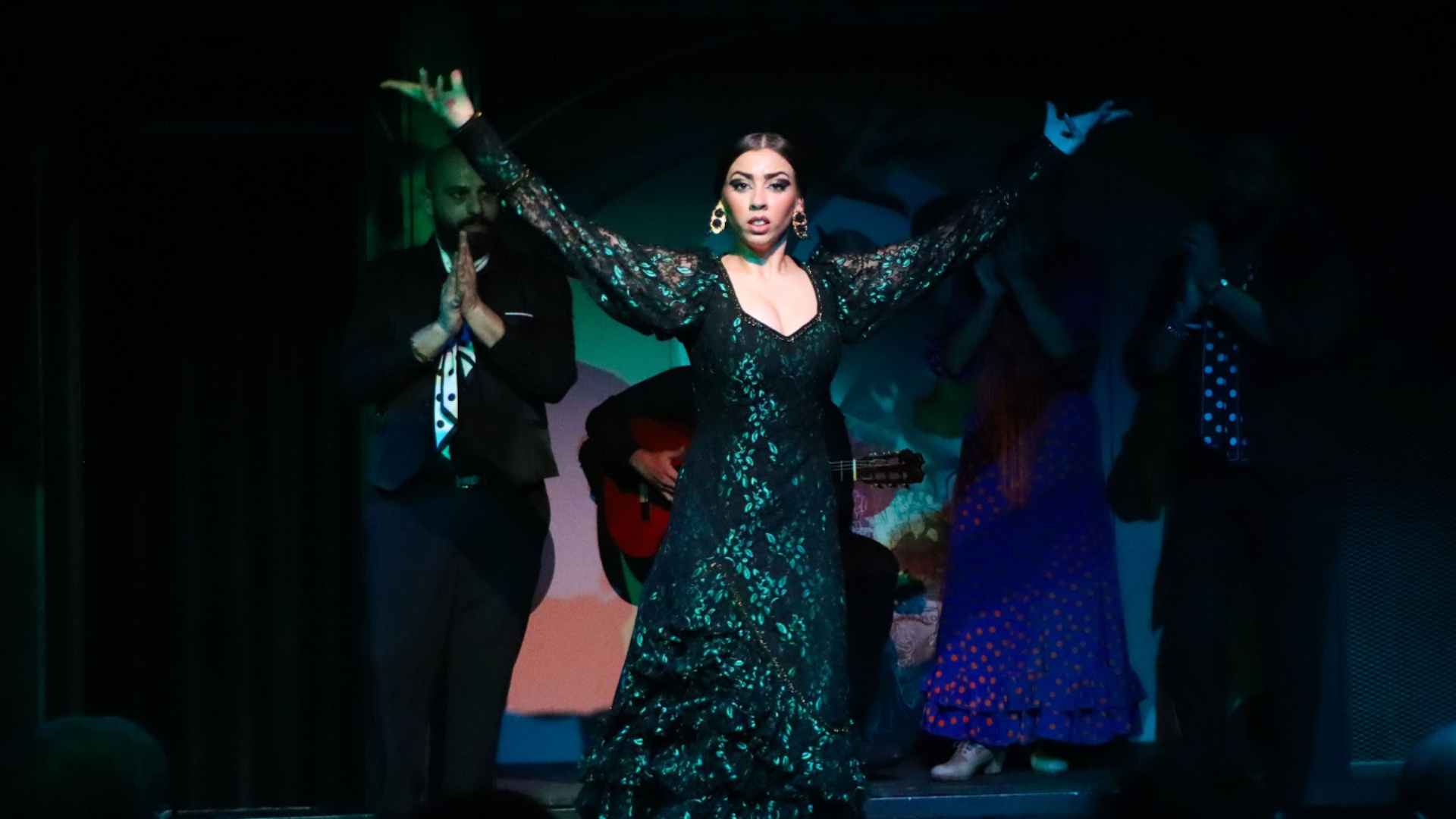
Few sounds are as instantly recognizable as the crisp, rolling clatter of castanets. Close your eyes and you can probably hear them right now: that rapid, wooden trill that seems to dance in the air alongside a swirling skirt and a passionate guitar.
For many visitors to Spain, castanets are the very sound of Spanish culture. Yet the real story of flamenco castanets is far richer, older and more surprising than most people imagine.
In this guide we explore where castanets come from, how they actually work within flamenco, the difference between the castanets you see in souvenir shops and the professional instruments used on stage, and how you can experience them live at an authentic flamenco show in Barcelona.
What Are Castanets?
Castanets, known in Spanish as castañuelas, are a percussion instrument made of two concave shells joined by a cord. The player loops the cord over the thumb and strikes the shells together with the fingers, producing anything from a single dry click to a continuous, thunderous roll.
Traditionally, castanets were carved from hardwoods such as ebony, rosewood, granadillo or pomegranate wood. In fact, the Spanish name comes from castaña, meaning chestnut, a reference to both the shape and the material of early versions.
Today, professional players often prefer castanets made from pressed fabric and resin composites, which offer greater durability, consistent tone and resistance to humidity, all important qualities for artists performing night after night.
A pair of castanets is never truly identical. Each hand holds a shell with a slightly different pitch. The higher pitched pair, called the hembra (female), is worn on the right hand and carries the intricate rhythmic detail.
The lower pitched pair, the macho (male), sits on the left hand and marks the fundamental beat. This dialogue between high and low voices gives castanet playing its unmistakable depth and texture.
A Brief History of Castanets: Older Than Flamenco Itself
Here is something that surprises almost everyone: castanets are thousands of years older than flamenco. Percussion instruments made of paired shells, bones or wood appear in ancient Egyptian, Greek and Phoenician cultures. The Phoenicians are widely credited with bringing early forms of the instrument to the Iberian Peninsula more than two thousand years ago, where it took root and evolved.
Throughout Spanish history, castanets became deeply woven into regional folk traditions. Long before flamenco emerged in Andalusia in the 18th and 19th centuries, castanets were already central to dances such as the jota in Aragón, the sevillanas of Seville and the fandangos found across the peninsula.
Spanish classical dance, known as the escuela bolera, elevated castanet playing to a refined academic discipline, complete with codified techniques taught in conservatories.
Flamenco absorbed the castanet later, and somewhat selectively. Purists have long debated its place in the art form, since the earliest flamenco relied on voice, palmas (rhythmic hand clapping), footwork and eventually the guitar.
Castanets entered flamenco primarily through theatrical and classical Spanish dance influences during the 20th century, championed by legendary figures who blurred the lines between flamenco and stylized Spanish dance.
Legendary Artists Who Defined Castanet Playing
No history of castanets is complete without mentioning the artists who transformed them from a folk accessory into a virtuoso instrument.
La Argentina (Antonia Mercé) revolutionized Spanish dance in the early 20th century and treated castanets as a serious musical voice, capable of nuance, dynamics and phrasing rather than mere noise.
Carmen Amaya, the legendary flamenco dancer born in Barcelona, brought raw gypsy fire to international stages and showed the world that flamenco could thrill audiences from Paris to Hollywood.
Lucero Tena took things even further, performing castanet concertos with symphony orchestras and proving that these small wooden shells could stand alongside any classical instrument.
Antonio Ruiz Soler, known simply as Antonio el Bailarín, dazzled audiences with castanet work of astonishing speed and precision, cementing their place in theatrical flamenco.
These pioneers established the technical and expressive vocabulary that today's dancers continue to develop on stages around the world, including the intimate tablaos of Barcelona.
How Castanets Are Played: Technique Behind the Magic
Watching a skilled dancer play castanets while executing complex choreography is genuinely astonishing.
The hands produce cascading rhythms while the feet hammer out counter rhythms and the body maintains the elegant lines of flamenco posture. Achieving this requires years of dedicated training.
The basic strokes of castanet technique include:
Golpe: a single, simultaneous strike of both castanets, used to punctuate strong beats.
Carretilla: the famous roll, produced by drumming the four fingers of the right hand in rapid succession across the hembra, usually finished with a thumb stroke.
Postizo (or choque): striking the two castanets against each other in front of the body for a bright accent.
Pasillo: alternating single strikes between left and right hands to create walking rhythms.
Coordinating these strokes with flamenco's complex rhythmic cycles, known as compás, is the true challenge. Flamenco styles such as sevillanas, fandangos de Huelva, caracoles and the elegant guajiras are the natural home of castanets, where their bright articulation enhances the festive or lyrical character of the music.
In deeper, more solemn styles like soleá or siguiriya, castanets appear rarely, as tradition favors the unadorned power of voice, guitar and footwork.
Souvenir Castanets vs. Professional Castanets
If you have wandered along Las Ramblas in Barcelona, you have certainly seen colorful castanets hanging in souvenir shops, often painted with flowers or flamenco dancers. These make charming keepsakes, and there is nothing wrong with taking a pair home as a memory of your trip.
Professional castanets, however, belong to a different universe. Handmade by specialized artisans, they are precisely tuned, matched in pairs and priced anywhere from 80 to several hundred euros.
Serious players select them the way a violinist selects a bow, testing the pitch, the rebound and the voice of each pair. Renowned Spanish makers have supplied generations of dancers, and many artists own several pairs in different pitches to suit different repertoire.
If you are inspired to learn, teachers generally recommend starting with mid range fabric composite castanets rather than decorative wooden ones, since consistent tone and comfortable weight make practice far more rewarding.
Do All Flamenco Shows Feature Castanets?
This is one of the most common questions visitors ask, and the honest answer is no. Castanets appear in flamenco selectively, depending on the repertoire each artist chooses to perform. A traditional tablao show built around cante jondo (deep song) may feature no castanets at all, focusing instead on the raw dialogue between singer, guitarist and dancer.
Other performances, especially those including sevillanas, caracoles or pieces influenced by classical Spanish dance, showcase spectacular castanet work.
This variability is part of flamenco's living nature. Every night is different, every artist brings their own repertoire, and improvisation shapes each performance. Authentic flamenco works as a conversation between artists that unfolds in real time.
When castanets do appear, they arrive as a deliberate artistic choice, and witnessing them live, just a few meters away, is an experience no recording can replicate.
Experience Flamenco Live at El Duende in Barcelona
To truly understand the power of flamenco percussion, whether castanets, palmas or thunderous zapateado footwork, nothing compares to a live performance in an intimate venue. El Duende by Tablao Cordobes, located at La Rambla 33 in the heart of Barcelona, offers exactly that experience.
Born from the legacy of the legendary Tablao Flamenco Cordobes, a landmark of Barcelona's flamenco scene since 1970 and recognized as the Best Tablao in the World 2025, El Duende is an intimate flamenco bar with capacity for just 120 guests. Every seat keeps you close to the stage, close enough to see the dancers' hands in detail, feel the vibration of the footwork and catch every nuance of the music.
Shows last around 50 to 55 minutes and feature a rotating cast of six to seven outstanding artists, from established stars to rising talents, so the lineup changes throughout the month and no two nights are ever the same.
The venue takes its name from the concept Federico García Lorca made famous: duende, that mysterious force that transforms technique into pure emotion, the shiver that runs down your spine when an artist reaches something beyond skill.
With performances daily at 7:00 pm, 8:15 pm and 9:30 pm, and a curated cocktail menu to accompany the show, El Duende blends the authenticity of a traditional tablao with the relaxed atmosphere of a stylish flamenco bar.
Ticket options range from guaranteed first row seats in the Frontal Zone to accessible last row seats, with most seating categories including one drink during the show, such as wine, beer, sangria, cava or a soft drink.
Guests in every zone can also order from a curated menu of signature cocktails inspired by the different styles of flamenco, available for purchase directly at the bar.
Final Thoughts: Small Shells, Immense Soul
Castanets embody something essential about Spanish art: the ability to transform the simplest materials into profound expression.
Two small shells of wood or fiber, a cord and ten fingers can produce rhythms of breathtaking complexity and emotion. From ancient Phoenician traders to the concert halls of the 20th century and the tablaos of modern Barcelona, castanets have accompanied the Iberian Peninsula through millennia of history.
The next time you hear that unmistakable roll, you will know the centuries of tradition behind it. Better yet, come hear it where it belongs: live, up close, in the intimate glow of a Barcelona tablao, where the duende is always waiting.
Ready to experience authentic flamenco in Barcelona? Book your tickets for El Duende by Tablao Cordobes at La Rambla 33 and discover why this art form has captivated the world for generations.